
Free Consultations703-542-4500

Blog
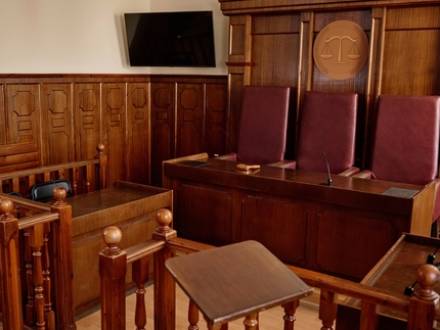 If you’re accused of battery in Virginia, the alleged victim cannot drop the charge. Once a warrant is issued, the case belongs to the Commonwealth, not to the person who called police or the person who claims to have been assaulted. The prosecutor decides whether to seek a nolle prosequi (which means "not to wish to prosecute"), and the judge decides whether to grant it. That said, what the alleged victim wants still carries real weight.
If you need to build a defense against a battery charge in 2026, our Prince William County, VA criminal defense lawyer can help. You have legal options available to you.
The Commonwealth can subpoena someone who refuses to testify in a criminal case. A witness who ignores a valid subpoena can face contempt, and courts in Virginia do enforce this.
 You can be charged with drug possession in Virginia even if the drugs weren't yours. The law focuses on whether you knowingly had control over the substance. It doesn't focus on who actually owned it. If you're facing charges in 2026, our Loudoun County, VA drug possession defense lawyer can help you challenge the state's evidence.
Under Virginia Code Section 18.2-250, it's illegal to knowingly and intentionally possess a controlled substance. The state has to prove you knew about the drugs and had control over them. It's not enough to simply show that the drugs were found somewhere near you or in a space you had access to. This requirement becomes especially important when drugs are found in what's called constructive possession.
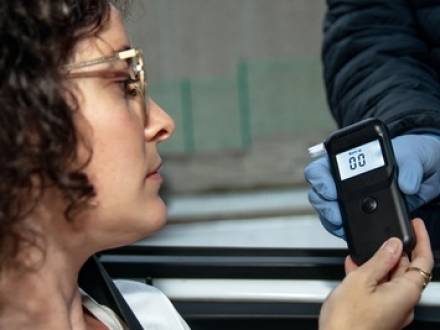 If you've been charged with driving under the influence in Virginia in 2026, you can prove you weren't impaired through several kinds of evidence. However, none of them guarantee a certain outcome on their own. Regardless, each one can help build a stronger picture of what actually happened that night. An Arlington County, VA DUI defense lawyer can help you gather this evidence and put together the right defense for your case.
Courts in Virginia look at more than just a single breath test result. Evidence that can support your claim of sobriety often includes:
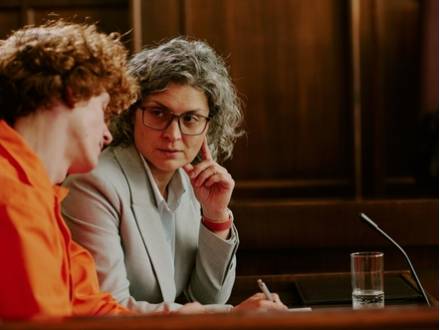 While it is possible to get a domestic violence charge dropped in Virginia, it is not as simple as asking the alleged victim to change their mind. Once an arrest is made, the decision to move forward belongs to the prosecutor. If you are facing a domestic violence charge in 2026 and hoping to get it dropped, a Loudoun County, VA criminal defense lawyer can help you understand what options may be available and what it takes to pursue them.
This is one of the most common misconceptions about domestic violence cases. In Virginia, these charges are prosecuted by the Commonwealth, not by the alleged victim. The alleged victim is a witness in the case, not the person bringing the legal action. Once police make an arrest and send the case to the prosecutor's office, the prosecutor decides whether to move forward, reduce, or drop the charge.
 If you are searching for the top CSAM defense lawyer in Fairfax County, you are probably not looking for a generic answer. You are looking for someone who understands how serious child pornography sex crimes are, how these investigations develop, and what must be done when police start asking questions.
A CSAM investigation is not something you want handled casually, and the Virginia criminal defense lawyer you choose can make a huge difference in how the case unfolds.
The truth is that "top CSAM lawyer" is not just a label. What matters is what sits behind it. In a Virginia CSAM case, you want a lawyer who understands:
 If you are facing a CSAM investigation or charge in Fairfax County, one of the first questions you probably have is what the penalties are. That is understandable. These cases are serious, and people want to know what kind of punishment they might be looking at.
The problem is that the answer depends on what the government is alleging you did. Possession and distribution are not the same thing, and the consequences are very different depending on the charge. Our Stafford County, VA CSAM defense lawyer can help you understand exactly what the charges are and what the penalties might be.
Under Virginia law, knowing possession of child pornography is a Class 6 felony under § 18.2-374.1:1. A second or subsequent possession offense is a Class 5 felony.
 If you are under investigation for CSAM in Virginia, one of the most important questions is whether the case involves possession, distribution, or both. Those words are sometimes used casually, but under Virginia law, they are not the same thing. The difference is important and can significantly affect what the Commonwealth has to prove and what charges you are actually facing.
If you are being charged or investigated for CSAM, you need an Arlington County child pornography defense attorney who treats every client like family and approaches every case with the same level of care and attention we would expect if we were in your shoes.
A possession case centers on whether someone knowingly possessed prohibited material. That word — knowingly — is pivotal. The Commonwealth cannot simply point to a device with CSAM on it and rest its case there. Under Virginia Code § 18.2-374.1:1, prosecutors must prove that the person was aware of the material and possessed it intentionally.
 If police execute a CSAM search warrant at your home in Fairfax County and then ask to speak with you, the first thing to understand is that the interview is not just a conversation. It may feel like detectives are giving you a chance to explain things, clear up the situation, or help yourself, but they are not. By the time police are asking questions after a search warrant, they are usually trying to complete a case before bringing charges.
If the police have seized your devices and now they want to talk to you, meet with an Arlington County CSAM defense attorney before you do anything else.
It might not feel like it at the moment, but an interview after a warrant is not an opportunity to tell your side of the story. In CSAM investigations, the digital evidence alone may not answer every question the Commonwealth needs answered. Detectives may want to know:
 If police took your phone, computer, tablet, hard drive, or other electronic devices during a CSAM investigation in Fairfax County, the first thing to understand is that the case is not automatically open and shut. The moment where police come to your house and take your belongings feels overwhelming. It is meant to. Officers come into your private space, take electronics, leave paperwork, and then everyone is left trying to figure out what happens next.
But the seizure of a device is not the same thing as proof. The government still has to prove you are guilty beyond a reasonable doubt. If you are being investigated for CSAM, our Loudoun County child pornography defense attorney can help. Call us right away at 703-542-4500.
In CSAM investigations, law enforcement often takes more devices than people expect. They may seize:
 If you are dealing with a CSAM investigation in Fairfax County, there is a good chance you have heard the word CyberTip. That term can sound vague, but it is often one of the first pieces of information law enforcement uses to begin an investigation.
The important thing to understand is that a CyberTip is not a conviction. It is not proof by itself. It is information that may start an investigation, and a great Fairfax County criminal defense attorney begins by looking at how that information was created, what it actually says, and how law enforcement used it.
The National Center for Missing and Exploited Children ("NCMEC") describes the CyberTipline as the national centralized reporting system for online child exploitation. Reports can come from members of the public and electronic service providers. NCMEC may review the information and make it available to the appropriate law enforcement agency for possible investigation under Virginia statute § 18.2-374.4.

Noorishad Law, P.C.
8200 Greensboro Drive, Suite 900
McLean, VA 22102
(By Appointment Only)
703-542-4500 - Office
703-636-8945 - Fax


Reach out to us by filling out the form below or calling 703-542-4500. We are available 24/7 to address your needs, and we will provide you with a free consultation.

From our office in McLean, VA, Noorishad Law, P.C. provides legal help to clients and their families throughout the area, including Fairfax County, Arlington County, Loudoun County, Prince William County, Alexandria, Annandale, Arlington, Ashburn, Broadlands, Burke, Cascades, Centreville, Dale City, Dumfries, Fairfax, Falls Church, Gainesville, Haymarket, Herndon, Lake Ridge, Leesburg, Manassas, Montclair, Occoquan, Purcellville, Quantico, Reston, Stafford, South Riding, Springfield, Sterling, Stone Ridge, Sugarland Run, Tysons Corner, Vienna, Woodbridge, and Woodburn.
Results listed are not a guarantee or indication of future case results.